
Mursley
Simple and elegant
PROJECT OVERVIEW
This project in Mursley focused on creating a simple, elegant garden that was easy to maintain while still offering year-round interest.
Working with a sloping site and a poor-quality lawn, the aim was to develop a practical outdoor space that balanced structure with a softer planting-led approach.
PROJECT DESIGN BRIEF
- Create a low-maintenance garden
- Improve a sloping and underperforming lawn
- Introduce clear, usable outdoor spaces
- Provide a dedicated area for outdoor dining
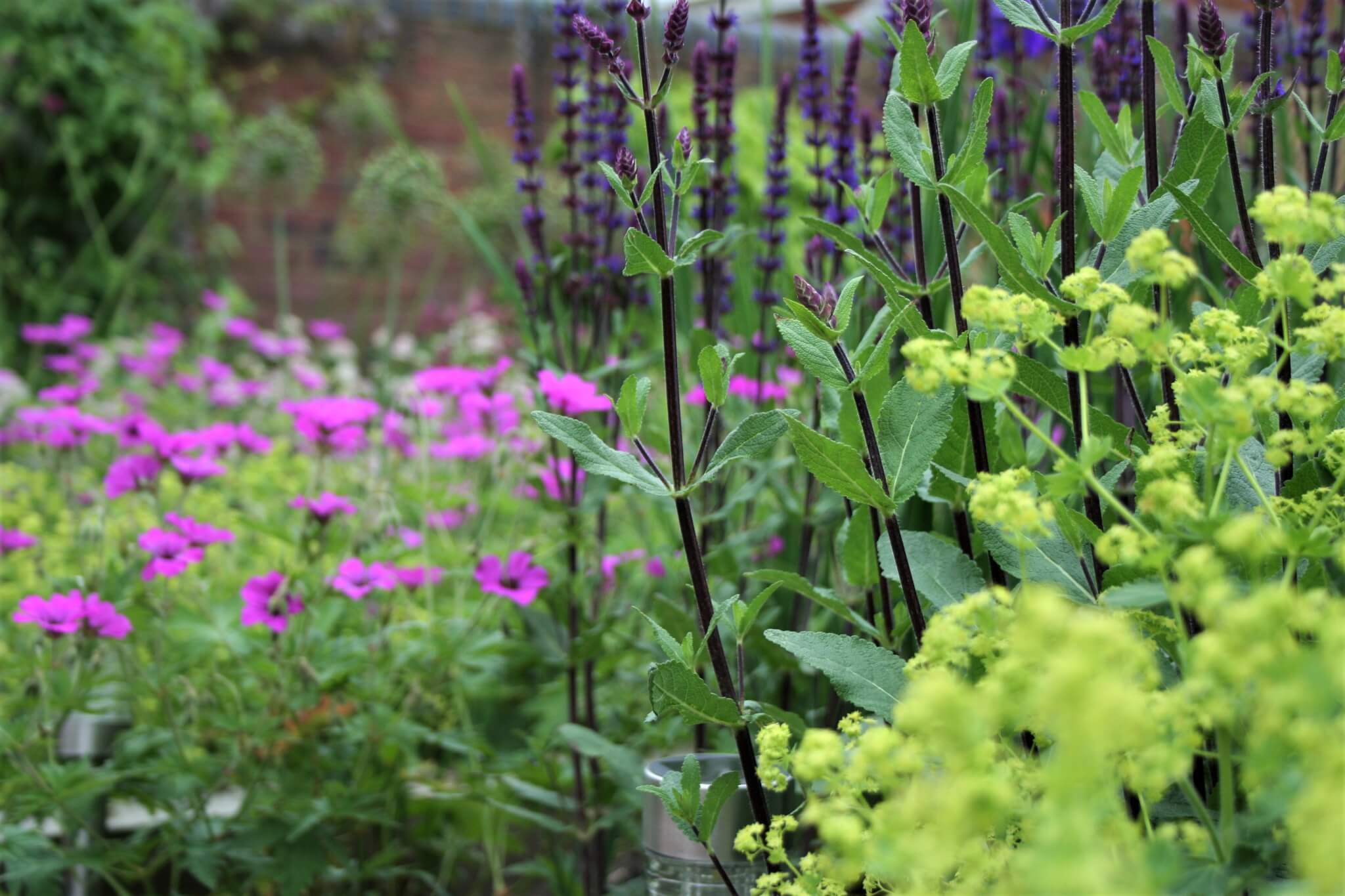
- Enhance planting with a focus on colour and seasonal interest
- Keep the overall design simple and refined

The Challenge
The existing garden lacked structure and usability. The sloping terrain made it difficult to enjoy the space, while the lawn was in poor condition and offered little visual appeal. The design needed to resolve these issues in a straightforward way, without overcomplicating the layout or increasing maintenance demands.
OUR DESIGN APPROACH
We focused on simplicity and balance. By introducing subtle level changes and defined areas, the garden could function more effectively while still feeling open and uncluttered.
Planting was used as the primary way to bring life, colour and softness into the scheme.

KEY FEATURES
The Outcome
The finished garden is a simple but effective transformation. What was once a sloping, underperforming space is now a structured and inviting garden that is both practical and pleasing to spend time in.
With planting at its heart, the scheme delivers colour, interest and usability without adding unnecessary complexity.
Our Instagram posts
Want to enjoy your garden next summer? Start planning it now.
Summer has a way of showing you exactly what your garden is missing.
Maybe there isn’t enough shade.
The seating is in the wrong place.
There’s nowhere comfortable to eat outside.
Or the space just isn’t being used as much as you hoped.
Those are useful things to notice now, while you can still remember how the garden has worked through the warmer months.
A well-planned garden takes time. There are ideas to explore, decisions to make and the build itself to schedule.
Starting the conversation now gives the whole process room to breathe, and gives you the best chance of having a garden ready to enjoy next spring or summer.
Thinking about a garden you can enjoy next spring or summer? Get in touch now and let’s start planning it properly.



A garden like this needs to feel as though it has always belonged.
This Wingrave project formed part of the wider restoration of an impressive Georgian home. The design took its lead from the architecture, using symmetry, proportion and strong lines to help anchor the house within the wider plot.
Sawn Yorkstone, heritage brickwork and bespoke metalwork bring structure and character, while Yew, topiary, pleached trees and softer seasonal planting keep the garden from feeling overly formal.
A reflection pool, restored well, glasshouse and productive kitchen garden add further layers, creating a space that respects the history of the property while still working beautifully for modern life.
See the full Wingrave project in our portfolio - link at the top of our page ☝️

There’s something about the sound of running water that instantly makes a garden feel calmer.
A water feature can create a focal point, bring movement into the space and make even a quiet corner feel a little more special.
And on a hot day, it somehow makes the whole garden feel cooler too.
Would you add a water feature to your garden?

Q&A with Danny | What affects the cost of landscaping?
It’s a question we’re asked all the time - and there isn’t really a one-size-fits-all answer.
The size of the garden plays a part, but so do the materials you choose, access to the site, levels and groundwork, planting, features and, ultimately, what you want the finished garden to do for you.
That’s why having a realistic budget conversation early on is so useful. It means we can design with that budget in mind and help you decide where it’s worth investing to get the most from your garden.
Your budget helps shape the garden.
Good design makes it work harder.
Have a question you’d like Danny to answer next? Pop it in the comments.

A family garden needs to do a lot.
Somewhere to relax, somewhere to entertain, and space for everyone to enjoy in their own way.
At this Chalfont St Giles garden, the layout was completely rethought to create different areas without making the space feel divided.
The pergola, seating and fireplace now give the family a proper place to gather, while the rest of the garden still feels open, calm and connected.
One garden. Space for everyone.
See more of the Chalfont St Giles garden in our portfolio.

Steps and level changes should feel natural.
You shouldn’t have to concentrate every time you move between the house, lawn, terrace or seating area.
That means getting the height, depth and rhythm of each step right, as well as considering where people naturally pause, turn or carry things through the garden.
The materials matter too.
Using consistent finishes and planting around the level changes helps the different areas feel connected rather than broken up.
They may seem like small decisions, but they have a big impact on how comfortable the finished garden is to use.
Good garden design isn’t only about how a space looks. It’s about how it feels to move through it.
Read more on the blog, link in bio at the top of the page.

Clay soil gets a bad reputation.
It can feel heavy, sticky and difficult to work with in winter, then hard and cracked during long dry spells.
But it also holds nutrients well, and with the right preparation, planting and drainage, it can support a really healthy garden.
The important thing is understanding the conditions before the design and build begin.
That might mean improving the soil structure, choosing plants that will thrive there, managing water carefully and avoiding areas becoming compacted during construction.
The aim isn’t to fight the garden you have - it’s to understand it and design around it.

A finished garden can look effortless. But there’s a lot behind it.
Every project starts long before the paving goes down or the planting begins.
Groundworks, drainage, levels, access, materials, craftsmanship and hundreds of small decisions all come together to create a garden that doesn’t just look beautiful on day one, but continues to perform for years to come.
There are muddy days. Weather delays. Unexpected challenges. That’s simply part of creating a garden properly.
Because great landscaping isn’t just about the finished photograph.
It’s everything you don’t see that makes it safe, usable and built to last.
If you’re planning a garden transformation for next year, now is the perfect time to start the conversation.

Before thinking about paving, planting or pergolas, it helps to take a step back.
How do you actually want to use the garden? What frustrates you about it now?
What would you like to keep? How much maintenance feels realistic?
And when would you ideally like the work completed?
These questions help shape the design long before materials are chosen or construction begins.
A clear brief does not mean knowing exactly what the finished garden should look like. It simply means understanding what you need the space to do.
That gives the design somewhere meaningful to start.
Save this for your garden-planning notes - and when you are ready to take the next step, get in touch.

Another heatwave is on the way… and suddenly a pool feels less like a luxury and more like a necessity. 😅
Somewhere to cool off, somewhere to relax, and a very good reason to stay in the garden all day.
Anyone else adding “swimming pool” to the garden wish list?
