
How to design a sloped garden | Ideas for challenging terrain
Turning a challenge into an opportunity.
Being based in the Chilterns, many of our clients’ gardens across Buckinghamshire and Hertfordshire include a slope. While slopes are sometimes seen as a problem, they can actually become one of the garden’s greatest design opportunities.
A well-planned sloped garden can introduce drama, layered planting, better views and distinctive outdoor spaces that flat gardens often lack.
With the right design approach, a challenging site can be transformed into a beautiful and highly functional landscape.
Know the slope
The first step in designing a sloped garden is understanding it properly. This typically begins with an accurate topographical survey as part of the wider design process.
A survey identifies not only the position of the slope but also its steepness and the subtle variations in level across the site.
It also helps highlight other factors that can influence the design. For example, south-facing slopes tend to receive more sunlight and are often warmer and drier, while north-facing slopes may retain more moisture and remain cooler throughout the year.
Drainage and soil stability are also key considerations. Water naturally travels downhill, which means erosion and run-off can become issues if they are not carefully managed.
By understanding the characteristics of the slope from the outset, potential challenges can be addressed early in the design process.
Taming the slope
One of the most common approaches to managing slopes is terracing.
Terraces divide a steep incline into a series of level areas, making the garden easier to use, maintain and enjoy. They also help slow the movement of water, reducing soil erosion.
Creating terraces usually requires retaining walls and careful construction to ensure the structure is safe and long-lasting. These can be constructed in a variety of materials – including natural stone, brick, timber or concrete – depending on the desired aesthetic, structural requirements and longevity of the design.
Well-designed terraces allow a sloped garden to become a sequence of usable spaces rather than a single difficult incline.

Moving through the garden
Access and movement through a sloped garden require thoughtful planning.
A direct path up a steep slope can feel strenuous, so gently winding routes are often used to reduce the gradient. In other areas, carefully designed steps may provide the most practical solution.
Safety is an important factor. Edges of terraces need to be considered carefully and steps must be comfortable and consistent to use.
Uniform riser heights and generous tread depths improve safety, while small landings or resting points can make longer climbs feel much more manageable.

Planting the slope
Planting plays an important role in stabilising a sloped garden while also adding visual interest.
Groundcover plants with spreading root systems help bind the soil together, reducing erosion and absorbing excess water. Ornamental grasses, low shrubs and deep-rooted perennials can all work particularly well.
Plant selection should also reflect the different conditions that occur across the slope. The top of the garden may be drier and more exposed, while lower areas may retain more moisture.
Designing with these microclimates in mind helps ensure healthier planting and a more resilient landscape overall.

Embracing the slope
Rather than trying to hide the slope, the most successful garden designs celebrate it.
Changes in level create opportunities for dramatic viewpoints, cascading planting schemes and water features such as rills or small waterfalls.
Outdoor seating areas positioned at different levels can create a sequence of garden “rooms”, each offering its own character and perspective. A terrace halfway down the slope, for example, might become a quiet reading spot or a small dining area overlooking the rest of the garden.
When designed well, a sloped garden becomes a layered and dynamic space that reveals itself gradually as you move through it.
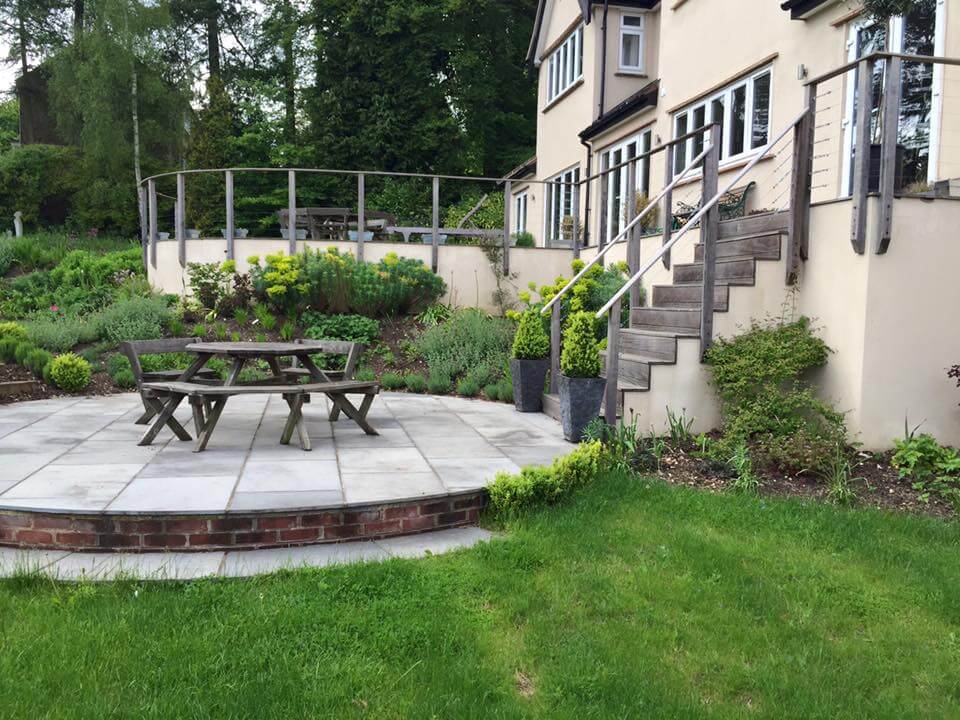
This Great Missenden project demonstrates how carefully designed steps, terraces and planting can connect different levels across a garden.
Designing sloped gardens in the Chilterns
Across the Chilterns and surrounding areas, sloped gardens are incredibly common. The natural landscape that makes this part of the country so beautiful also means many properties sit on uneven ground.
Designing these spaces successfully requires more than simply adding steps or retaining walls. It involves understanding drainage, soil stability, views and how the garden will actually be used throughout the year.
A well-considered design balances structure and planting so the garden feels natural rather than engineered. When done well, a sloped garden can become one of the most distinctive and enjoyable outdoor spaces a property has.
Transforming a challenging garden
Slopes can initially feel like a limitation, but they often create opportunities that flat gardens simply don’t offer.
With thoughtful design, a sloped site can become a layered landscape filled with planting, terraces, viewpoints and quiet spaces to sit and enjoy the surroundings.
For many gardens across the Chilterns, Buckinghamshire and Hertfordshire, the slope that once felt like a challenge can ultimately become the feature that makes the garden truly special.
If you’re considering redesigning a garden on a slope, careful planning and professional design can make all the difference.

